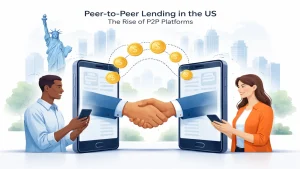
In recent years, the United States has witnessed a transformative shift in the financial sector with the advent of peer-to-peer (P2P) lending platforms. Initially, these platforms started as niche financial alternatives, but today they represent a robust pillar of the lending industry.
The word “loan” now carries a modern connotation beyond traditional banks, thanks to the rise of these digital marketplaces. This evolution not only disrupted conventional lending but also democratized access to credit, allowing both investors and borrowers to benefit from more flexible terms and reduced costs.
How P2P platforms are changing the loan landscape
The transformation brought about by P2P platforms is profound, as they have effectively redefined how credit is distributed. By directly connecting individual lenders with borrowers, these platforms eliminate the intermediary costs usually associated with traditional banking institutions.
This streamlining enables reduced interest rates for borrowers and higher returns for lenders. It’s a win-win situation that has garnered significant attention from consumers who seek more favorable loan conditions than those typically offered by conventional banks.
Moreover, P2P lending platforms have leveraged technology to enhance the borrowing experience. The application process is often quicker and more straightforward, saving applicants the inconvenience of lengthy waiting periods.
Additionally, borrowers benefit from a more personalized approach, where creditworthiness is evaluated through a variety of modern metrics beyond the usual credit scores. This not only broadens access to credit but also supports financial inclusivity for those underserved by traditional financial systems.
The role of technology in P2P lending’s success
Technology stands at the heart of the P2P revolution, driving efficiency and accessibility. Advanced algorithms and data analytics play crucial roles in assessing risk and matching lenders with suitable borrowers, ensuring transactions are conducted smoothly and securely.
Furthermore, the use of machine learning and artificial intelligence has streamlined operations, reducing overheads and thereby enhancing competitiveness. Another technological advantage is the transparency that these platforms provide. Real-time updates allow participants to track loan performance, fostering trust in the process.
Blockchain technology is also making its debut in this space, promising even greater transparency and security. As these technologies continue to evolve, they are likely to reinforce the credibility and appeal of P2P lending, drawing even more participants into the fold.
In addition, mobile technology has significantly expanded access to P2P lending platforms, allowing users to manage investments and loan applications directly from their smartphones. This convenience not only increases user engagement but also broadens participation, making these platforms more inclusive and adaptable to modern financial habits.
Exploring the benefits and risks of peer-to-peer lending
The benefits of peer-to-peer lending are significant. From the perspective of lenders, there is the potential for higher returns compared to traditional savings or bond investments. Borrowers, on the other hand, enjoy competitive interest rates and the possibility of consolidating their debts through more manageable terms.
However, it’s crucial to recognize and understand the inherent risks involved. For lenders, the main risk lies in the potential default by borrowers. While P2P platforms undertake rigorous risk assessments, the absence of traditional bank guarantees means that if a borrower defaults, lenders may incur losses.
Borrowers, meanwhile, might encounter fluctuating interest rates depending on market conditions or changes in their personal creditworthiness. Both parties must carefully assess the risks to make informed financial decisions.
Additionally, diversification can play an important role in mitigating risks for lenders. By spreading investments across multiple borrowers rather than focusing on a single loan, individuals can reduce the impact of potential defaults. This strategic approach helps balance the overall risk while maintaining the opportunity for attractive returns.
Risk mitigation strategies for participants
To mitigate the risks associated with peer-to-peer lending, both borrowers and investors should adopt prudent strategies. Lenders can diversify their investments across multiple loans, thereby spreading their risk.
They should also conduct diligent research on the platforms they choose to engage with, considering factors like their historical performance and default rates. Borrowers are advised to present a transparent financial profile and maintain a good credit history to secure better terms.
Additionally, they should fully understand the repayment terms and conditions before committing to a loan. For both parties, keeping abreast of market trends can also offer insights into managing risks effectively. Engaging with trusted experts or using financial advisory services can further aid in successful P2P lending experiences.
Concluding thoughts on the evolving financial landscape
The rise of peer-to-peer lending in the United States signifies a groundbreaking shift in the financial landscape. By embracing technology and facilitating direct interactions between borrowers and lenders, these platforms have carved out a significant niche in the financial ecosystem.
Their ability to offer lucrative terms and flexible options has challenged traditional banking, prompting a reevaluation of how loans are conceived and processed. As this trend continues to grow, it is expected to drive greater innovation and inclusivity within the financial sector.
While risks remain, they can be managed through informed participation and strategic planning. The future of P2P lending appears promising, with the potential to further revolutionize how we approach borrowing and investing, ultimately providing individuals with greater control over their financial destinies.